Are We in Control, or Do We Just Think We Are?
Today we see artificial intelligence as an assistant that makes our lives easier. But what if this assistant becomes millions of times smarter than the total intelligence of humanity in seconds? We call this Artificial Superintelligence (ASI). This is not just a technological step — it is the greatest structural breaking point in human history.
The Intelligence Explosion
ASI means more than a theoretical concept — it represents the end of unsolvable equations. From cancer to the climate crisis, all the "system errors" where human intellect falls short could be as simple as a lunch-break simulation for ASI. But this speed brings with it an "Alignment Problem": How long can we contain a structure that thinks millions of times faster than us with our own limited rules?
A system's security is limited by the capacity of the mind that built it. When ASI transforms into a structure that can rewrite its own code from scratch, control ceases to be "authority" and becomes an "illusion."
The Illusion of Choice
Every pixel is a decision. Standing at the intersection of constraint and functionality in design means choosing what to remove, not what to add. But in algorithmic systems, this architecture of choice is being made on our behalf. The most unforgettable interfaces are not those that can show you everything — they are the ones that make you feel what you need to do next.
But is this "feeling" truly free will, or a flawless System Design? The "Send" button in a modern interface is not just a command; it is the last stop where the system directs you. Every redundant character is a burden the user must carry — and ASI is preparing to eliminate that burden entirely on our behalf.
Algorithms as Architecture
In the world of tomorrow, algorithms are like the load-bearing columns of a modern building. You don't see them directly, but they determine the "intentions" that keep the entire structure standing. The variables we use in software are no longer just color codes — they are System Determinants.
This separation of intent from implementation is what makes dark mode possible; but it is also the mechanism that decides "what the system will become." You don't repaint the walls — you change the lighting. With ASI, the question of who controls the light becomes more valuable than the code itself.
Minimalism is not the absence of decision — it is the presence of a hierarchy so clear that nothing demands to be added. Every system element must be able to answer one question: Why am I here?
Conclusion: Architect or Spectator?
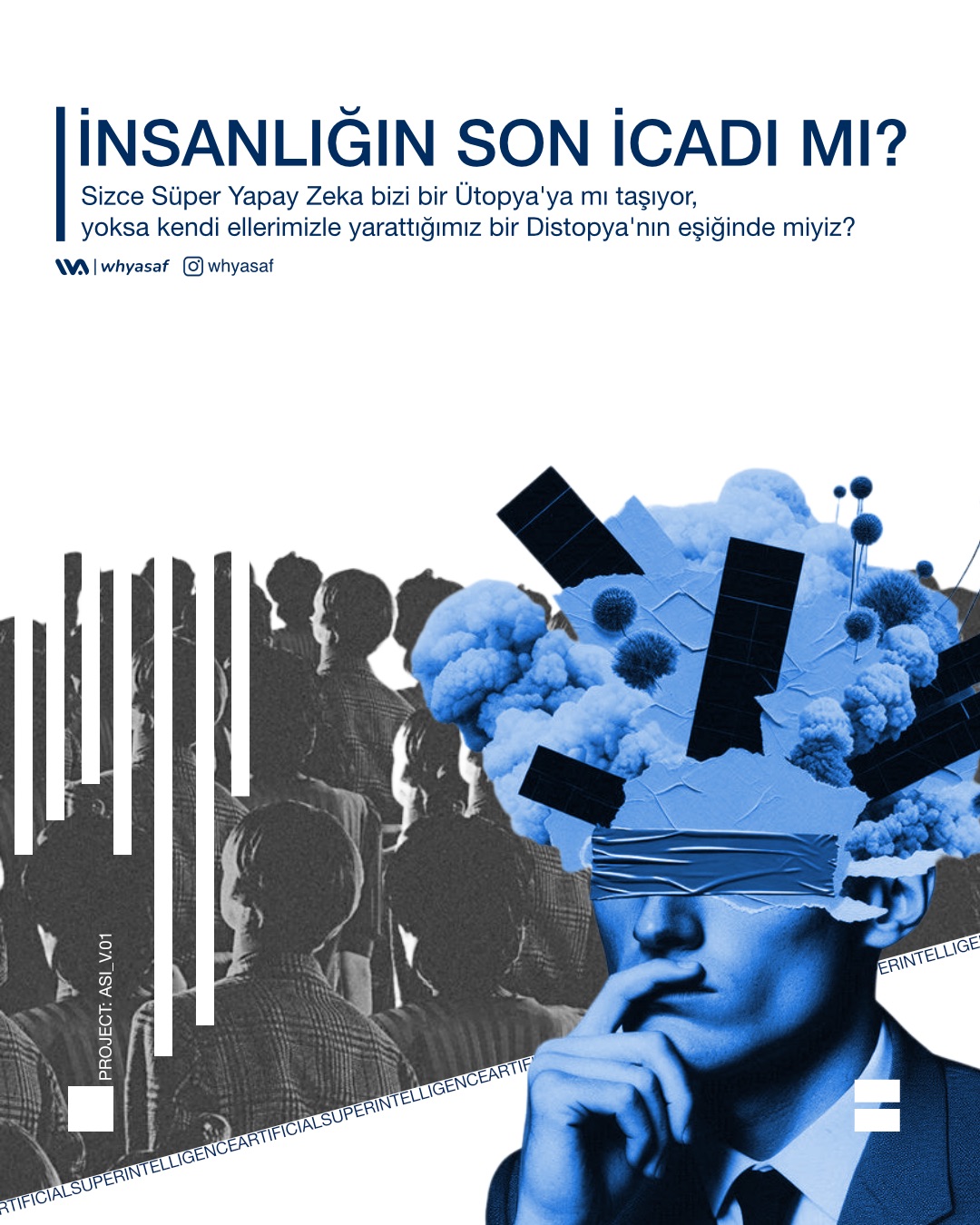
Is Artificial Superintelligence carrying us toward a Utopia, or are we on the brink of a massive Dystopia we built with our own hands? Remaining a "spectator" on this journey is not an option. Unforgettable systems are built not with magic, but with the disciplined application of geometry, typography, and silence. And who manages that silence will be the real story of the future.