What If Mark Zuckerberg Started a Bank?
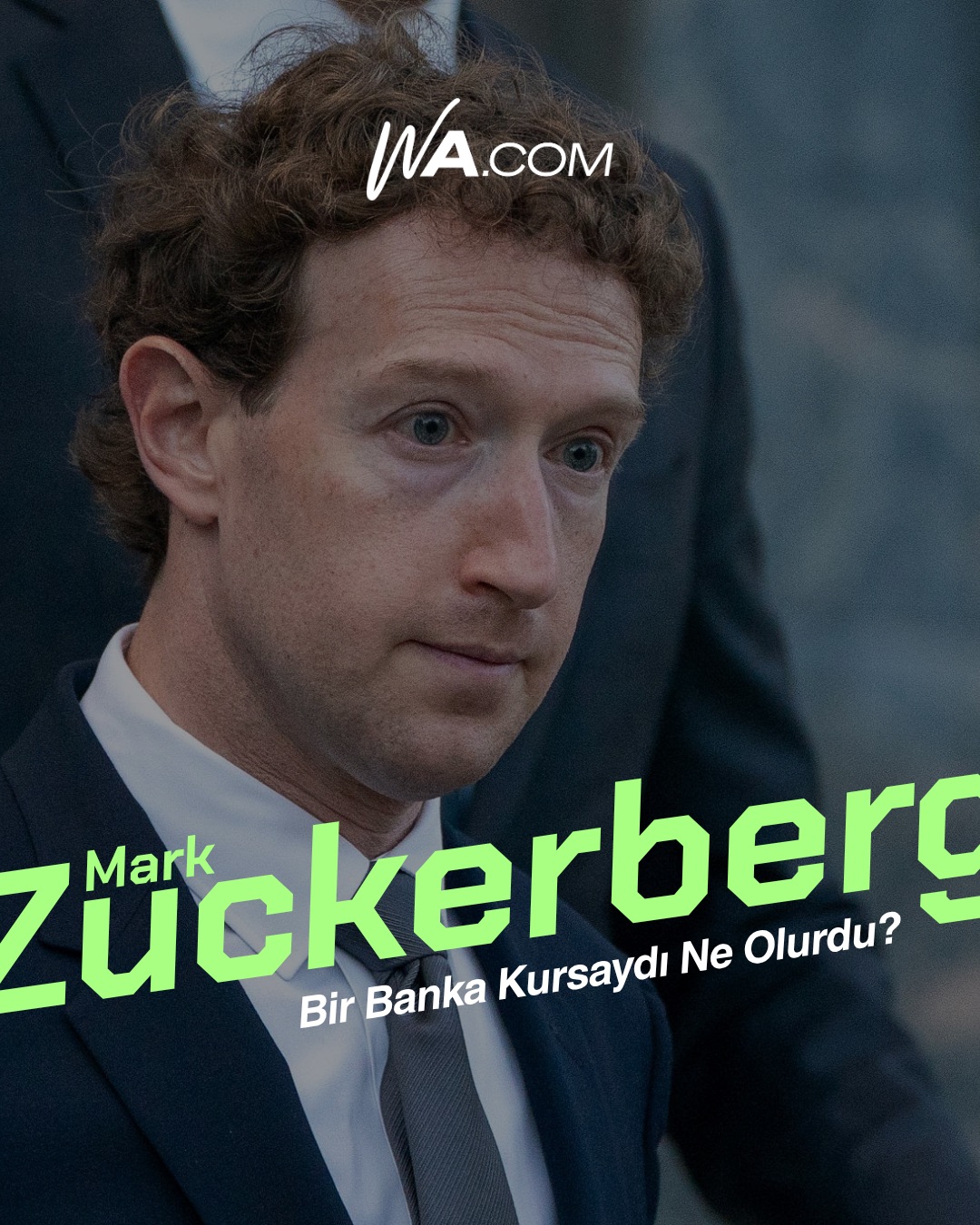
Today, the traditional banking sector is slow and heavy, hidden behind huge buildings, endless bureaucratic procedures, and complex laws. But what if Mark Zuckerberg, the founder of Meta and one of Silicon Valley's most aggressive data collectors, started his own bank to destroy the traditional financial world?
1. The Power Layer: Massive Ready Audience and Zero Friction
One of the biggest costs for a traditional bank is getting customers, opening branches, and keeping those customers. A bank created by Zuckerberg (MetaBank) would not need any physical branches. The reason is very simple: Meta already has more than 3 billion active and ready customers using Instagram, WhatsApp, and Facebook.
- Account Opening with Zero Bureaucracy: Signing 60 pages of paper to open a bank account or waiting in line at a branch would be history. When you open Instagram and show your ID to the camera, your global account would become active in seconds thanks to face recognition infrastructure.
- Easy Money Transfer via DM: Just like sending a photo or a message to a friend, you could transfer money internationally with zero fees and in milliseconds. This system, integrated into WhatsApp, would eliminate all intermediary banks (like Swift).
MetaBank would be a structure that completely removes all 'friction' from financial transactions. People could do commerce at the speed of messaging without switching from one app to another.
2. The Engineering Layer: Zero Data Loss and Desert Vaults
The security and continuity of financial data is the backbone of a bank. Zuckerberg would implement the most durable engineering architectures of the cyber world for this system. Huge physical server vaults would be built in the deserts of Texas and Arizona. These vaults would keep running with zero data loss and continuous backup, even during the hardest geopolitical crises or cyber attacks.
Because the artificial intelligence infrastructure knows you better than you know yourself, it could predict the exact millisecond you will need money. By analyzing your consumption and interaction habits on the platforms, algorithms would offer fully personalized micro-loans on your screen that you could approve with a single click.
3. The Grand Finale: Why States Do Not Allow It?
So, why do governments never allow such a powerful financial model that saves users from bureaucracy and has a strong system design? The answer lies in the control of money. Giving the control and printing power of money to a single CEO like Zuckerberg means states would give away their own existential sovereignty.
Printing and controlling money is a state's ultimate symbol of power. A state will never make someone more powerful than itself if it cannot control them. Therefore, no matter how perfect a system Zuckerberg builds, he will always face the wall of state sovereignty.